
The benefits of dancing salsa.
No partner or dance experience needed.
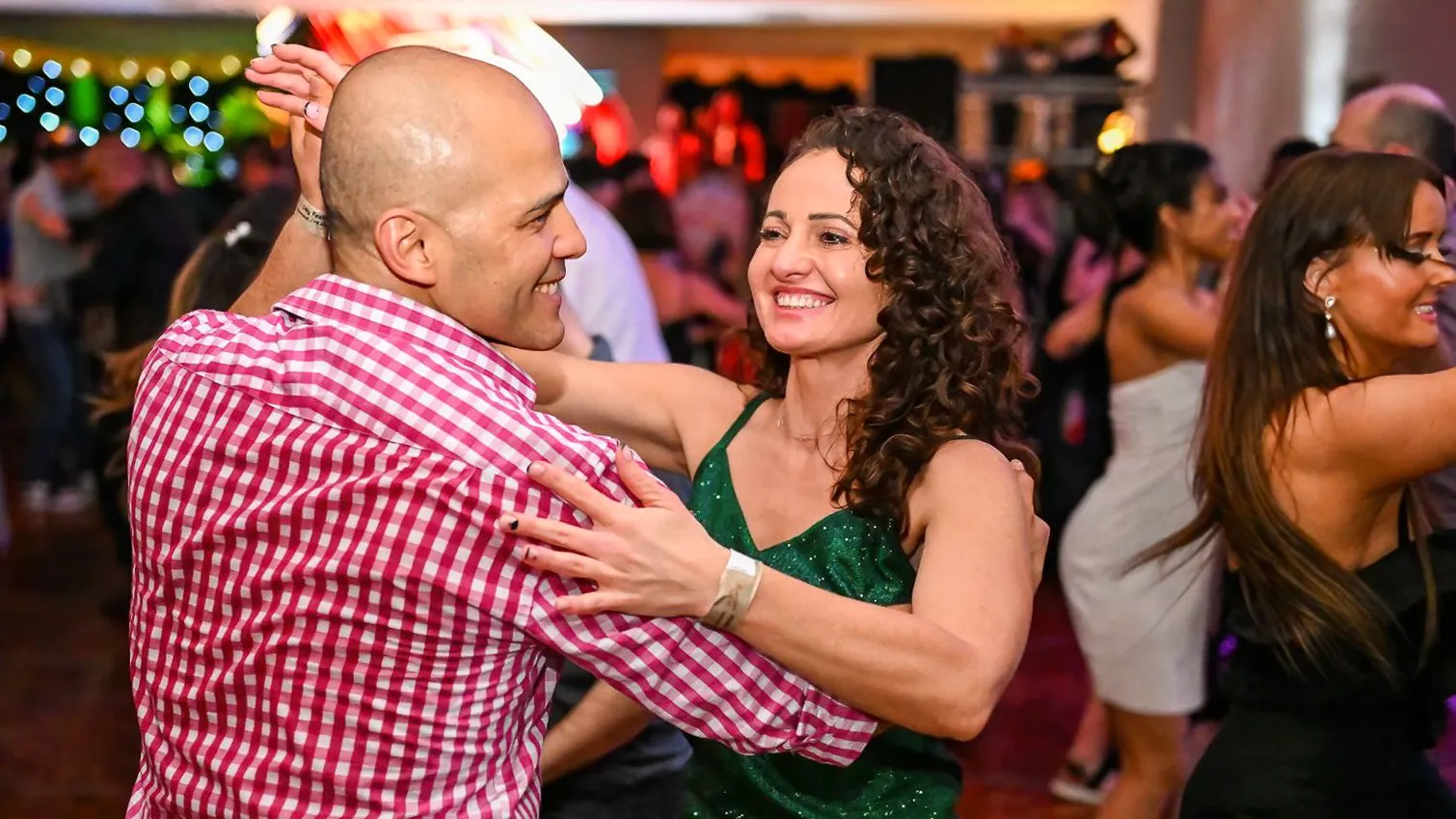
Why learn salsa?
Salsa combines physical activity with music, learning and social interaction. In class, you practise rhythm, coordination and partner work while meeting other dancers. With regular attendance, it can become an enjoyable way to stay active and build confidence on the dance floor.
Small changes that start with showing up.
You don’t need to arrive fit, outgoing or already able to dance. Beginner classes give you somewhere to start.
An enjoyable way to be active
Stepping, turning and moving to music puts time on your feet during the week. The pace varies as you learn and practise, so a beginner lesson won’t feel the same as a full evening of social dancing.
The focus is learning to dance, not chasing a calorie target.
Get to know more people
Partner rotation gives you a reason to introduce yourself and dance with different classmates. Coming back regularly creates opportunities to recognise faces, share progress and make connections.
You can arrive on your own. You won’t be learning on your own.
A break from the everyday
Listening for the beat and remembering a sequence give your attention something different to do. A class can be time away from screens and the day’s to-do list, with music and other people around you.
Some weeks, getting out of the house is a good start.
Confidence built through practice
Your first achievement might be finding the beat or remembering a basic turn. As familiar steps become easier, you have something concrete to build on. Confidence can grow through those small, repeatable successes.
You don’t have to feel confident before your first lesson.
Rhythm, coordination and a new skill
Salsa asks you to listen, remember and move at the same time. You practise timing your steps and communicating with a partner. Repetition helps those unfamiliar movements become more familiar.
Getting a step wrong is useful feedback, not a failed audition.
Music you can take beyond class
Learning Cuban salsa gives you a way to join in with the music. As your skills develop, social evenings offer a place to practise with different people and enjoy dancing outside a taught lesson.
There’s always a next step - when you’re ready for it.
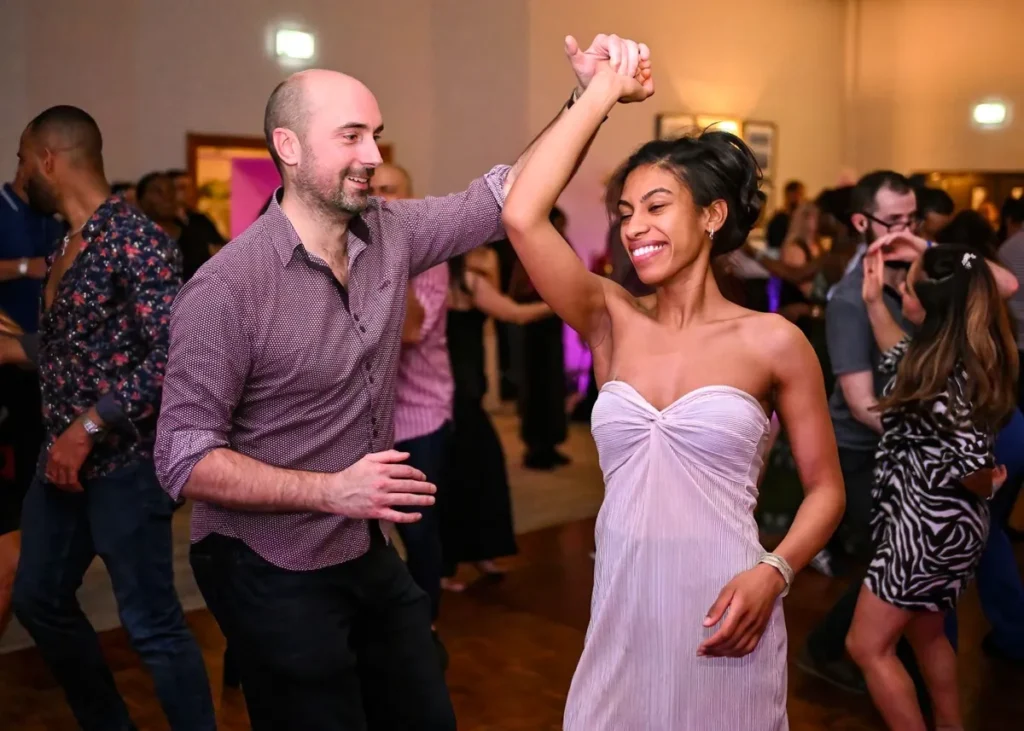
Classes teach you the moves. Our weekend socials are somewhere to enjoy them.
At a salsa social, the music plays and people invite each other to dance. You can try a familiar sequence with someone new, take a breather or watch for a while.
You don’t need a catalogue of moves to start enjoying yourself. A few basics, a little practice and a willingness to have another go are a useful beginning.
- Meet dancers beyond your usual class.
- Practise adapting to different partners.
- Enjoy the music without a lesson plan.
What does learning salsa actually involve?
There will be explanations, repetition and moments when your feet act like they belong to someone else. That’s part of learning.
Our Level 1 course gives beginners a structured introduction over seven weeks.
Start in week 1 where possible. New starters can join in weeks 2 or 3; after that, choose the next intake so you don’t miss the foundations.
Learn a little, then try it to music
Begin with basic steps and timing. Your teacher introduces movements you can practise, repeat and gradually combine.
Practise with other beginners
We rotate partners during class, so you can attend without bringing someone. Partner-work becomes another skill to learn together.
Keep building at the right level
Your teacher can help you judge the next step. Level 1 attendees can also take Level 1 classes at other Havana Salsa venues; check the timetable and course week before attending.
Find a class that fits your week.
Choose a location, check the next beginner start date and see your booking options. You can read the details before deciding.
Our full 7-week beginner course starts with a £79 initial payment, then continues automatically as Standard Membership at £44.99/month. Your venue page explains everything you need including the options and payment dates.
A few practical questions
You don’t need to know all the answers before your first class, but here’s are a useful place to start.
Salsa involves stepping, turning and moving to music. It can contribute to your physical activity, but the intensity depends on the class and how much you’re moving. Beginner lessons include instruction and pauses as well as dancing. Start at a pace appropriate for you; if you have health concerns, seek advice about suitable activity.
Yes. You don’t need a partner. Salsa was intended to rotate partners during lessons and socials, giving you opportunities to practise with different classmates. If you have questions about partner-work or coming alone, you can speak to one of our team.
You’re welcome to start as a complete beginner. Timing and coordination are skills you practise in class. You may need repetition, and some movements will take longer than others. You’re there to learn, with other people doing the same.
Havana Salsa’s Level 1 courses run for seven weeks and introduce the foundations. After that, progress depends on your practice and experience; your teacher can advise you about progressing or the benefits of repeating certain levels.
Yes. Level 1 attendees can take Level 1 classes at other Havana Salsa venues as well as their booked venue. Check class times and the course week before attending. During your Level 1 course, it will not be possible to join level classes as this can cause disruption for you and others expecting a certain degree of competence to progress.